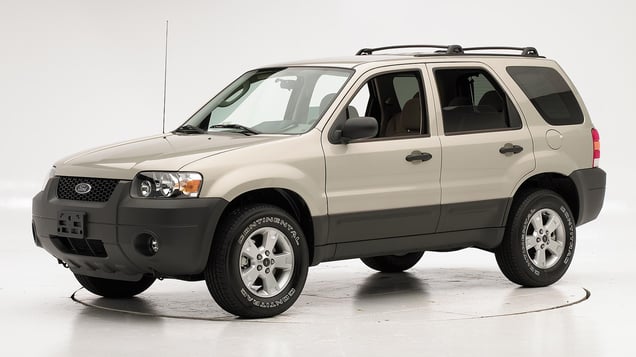
Ford Escape Safety: Structural Changes for Crash Protection
When considering a used vehicle, safety is often paramount, and for many prospective buyers eyeing an affordable, reliable SUV, the
2006 Escape frequently enters the conversation. This particular model year holds a significant place in the Ford Escape's safety evolution, benefiting from crucial structural modifications implemented just a year prior. Understanding these enhancements is vital for anyone weighing the pros and cons of purchasing a Ford Escape from this era. While an older vehicle will naturally lack the cutting-edge safety technology of modern cars, the 2006 Escape represents a notable step forward in fundamental occupant protection compared to its earlier iterations.
A Critical Turning Point: Structural Enhancements for the 2005-2006 Escape
The Ford Escape, along with its siblings, the Mazda Tribute and later the Mercury Mariner, underwent a pivotal transformation beginning with the 2005 model year. These were not mere cosmetic updates; they were substantial
structural modifications designed with one primary goal: to significantly improve
occupant protection in frontal crashes. This means that a
2006 Escape already incorporated these vital safety upgrades, making it a more secure choice than its 2001-2004 counterparts.
What exactly did these structural changes entail? Automotive safety experts and bodies like the IIHS often focus on several key areas for frontal crash protection:
- Reinforced Frame and Body Structures: Engineers likely strengthened critical load-bearing components within the vehicle's frame and unibody construction. This could include thicker gauge steel in key areas like the front subframe, door pillars, and roof rails.
- Improved Crumple Zones: The front of the vehicle is designed to absorb and dissipate crash energy away from the passenger compartment. Enhanced crumple zones mean that the vehicle deforms in a more controlled manner during an impact, reducing the force transferred to the occupants.
- Redesigned Load Paths: Crash energy needs to be directed along specific paths through the vehicle's structure. These modifications would have optimized these "load paths" to distribute impact forces more effectively, preventing intrusion into the passenger cell.
- Stronger Passenger Compartment Integrity: The ultimate goal is to create a robust safety cage around the occupants. The 2005 structural changes aimed to maintain the integrity of this cage, preventing collapse or excessive deformation that could compromise survival space.
These comprehensive structural revisions were critical for the Ford Escape's safety profile, distinguishing the 2005 and subsequent models (including the
2006 Escape) as safer options, particularly concerning frontal collision resilience. The Mercury Mariner, introduced in the 2005 model year, benefited from these same structural improvements from its inception, showcasing a shared commitment to enhanced crash protection across the platform.
Beyond the Frame: Understanding Overall Safety Features in the 2006 Escape
While the structural integrity forms the foundation of a vehicle's crashworthiness, other safety features also contribute to overall occupant protection. For the
2006 Escape, buyers can expect a set of standard safety equipment typical for its era:
- Dual Front Airbags: These are standard for both the driver and front passenger, deploying in moderate to severe frontal impacts to cushion occupants and prevent contact with the steering wheel, dashboard, or windshield.
- Anti-lock Braking System (ABS): A crucial active safety feature, ABS prevents the wheels from locking up during hard braking, allowing the driver to maintain steering control and potentially avoid obstacles. This is especially valuable in wet or slippery conditions.
- LATCH Child Seat Anchors: Lower Anchors and Tethers for Children (LATCH) provide a secure and standardized way to install child safety seats, enhancing protection for younger passengers.
It's important to set realistic expectations when evaluating the safety of a 2006 model. While the structural improvements were significant, the 2006 Escape would predate many common safety features found in modern SUVs. For instance, technologies like electronic stability control (ESC), side curtain airbags (which became more common later), rearview cameras, blind-spot monitoring, or adaptive cruise control were either not available or only just emerging as premium options on much higher-end vehicles at that time. Electronic Stability Control, specifically, was added as a standard feature to the Escape platform only with the modestly restyled 2008 models. Therefore, while the
2006 Escape offers improved foundational protection, its active safety suite is more rudimentary by today's standards.
What Do These Changes Mean for You, the 2006 Escape Buyer?
For anyone considering a used
2006 Escape, the structural improvements from 2005 are a significant positive. It means you're getting a vehicle designed with better frontal crash protection than its immediate predecessors. However, several factors still contribute to the overall safety of an older, pre-owned vehicle:
- Maintenance is Key: Even with robust structural integrity, a poorly maintained vehicle can be a safety hazard. Components like brakes, tires, and suspension systems are critical for safe operation. If you're looking at a 2006 Escape, ensure it has been regularly serviced. A vehicle with recent maintenance like new brakes, shocks, struts, and a timing belt (as sometimes seen with well-kept models) suggests a conscientious owner, which indirectly contributes to its continued safety. However, remember to factor in immediate needs like new tires. For a deeper dive into the economics of buying such a vehicle, consider reading our article on Is a $3000 2006 Ford Escape with 161k Miles a Good Deal?
- Tire Quality: The importance of good quality tires cannot be overstated. They are the only contact point between your vehicle and the road, directly impacting braking distance, handling, and traction in various weather conditions. If a potential purchase needs new tires, factor that cost into your budget immediately for safety reasons.
- Pre-Purchase Inspection: Always, always get a pre-purchase inspection from an independent, trusted mechanic. They can identify any existing accident damage that might compromise the vehicle's structural integrity, as well as spot other potential safety concerns or deferred maintenance.
- Driving Habits: Ultimately, driver behavior is the most critical safety factor. Regardless of a vehicle's safety features, cautious and defensive driving is paramount.
Understanding these structural enhancements allows buyers to make a more informed decision, recognizing that the 2006 Escape offers a solid baseline for passive safety from a fundamental design perspective for its age.
The Broader Context of "2006 Escape": A Note on Unrelated Events
It's worth noting that when searching for "2006 escape," online results might occasionally surface information about other significant events that occurred in that year, using the word "escape" in a different context. One such prominent event was the
2006 Sanaa Prison Escape. This infamous breakout involved 23 prisoners, primarily al-Qaeda militants, who tunneled out of a high-security facility in Yemen. While a critical event in geopolitical history, and sharing the year and the word "escape," it is entirely unrelated to the automotive safety features or performance of the Ford Escape SUV. Our primary focus here remains squarely on the vehicle's structural integrity and occupant protection.
Conclusion
The
2006 Escape stands out as a more robust choice within its generation of Ford SUVs, thanks to the critical structural modifications implemented for the 2005 model year. These enhancements significantly improved its ability to protect occupants in frontal crashes, a key consideration for any vehicle. While it may lack the advanced active safety systems prevalent in today's cars, its foundational design provides a commendable level of passive safety for its era. For prospective buyers, an informed decision involves balancing these inherent structural advantages with a thorough assessment of the vehicle's maintenance history, current condition, and an understanding of its overall safety feature set. Prioritizing a pre-purchase inspection and budgeting for essential items like new tires will ensure that any 2006 Escape you consider is as safe as it can be on the road.